At a glance
- Type
- Purebred, FCI No. 250, Group 9 (companion dogs)
- Height
- 23–27 cm; the FCI standard accepts 21–29 cm
- Weight
- Typically about 4.5–7 kg (the FCI standard sets no weight)
- Life expectancy
- About 13–15 years
- Coat
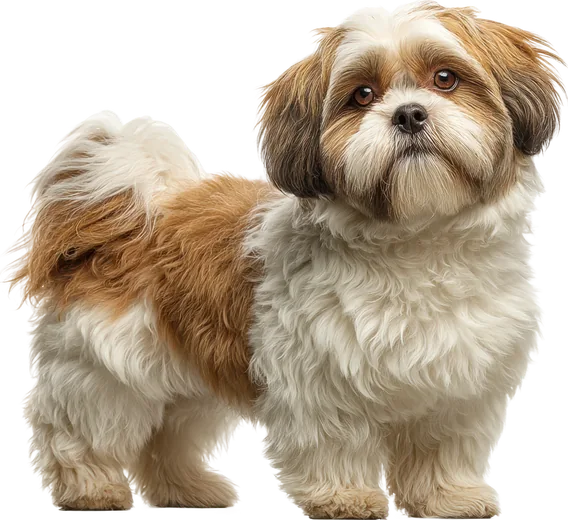
- Long, soft, silky, wavy double coat in all colours; sheds very little
- Grooming
- Long coat: combing every day · Short clip: brushing a few times a week and a groomer every 6–8 weeks
- Exercise
- About 30 minutes a day, plus play and training games
- With children
- Very good with children; playful and sturdy for his size
- In an apartment
- Yes, if he is not left alone for long days
- Cyprus summer
- Copes better than most long-coated breeds; still walk at dawn and dusk
- Our price
- from €1,350
About the Bichon Havanese
The Havanese is Cuba’s national dog, though the family it belongs to is Mediterranean — small white bichons carried west along the Spanish and Italian coasts and then on to Havana by ship. The old Cuban bloodlines were lost during the political upheaval of the last century; the breed survives because a handful of dogs left the island and were bred on in the United States.
The FCI standard is unusually warm about this one, describing a happy, affectionate dog with a streak of the comedian in him, and one who will play with children for as long as they keep going. That is a fair summary. The Havanese is also very bright and quick to train, and alert enough to announce the door without making a career of it.
He is built low and sturdy, moves lightly, and needs only about half an hour of walking a day, so an apartment suits him well. The coat is the commitment: long, soft, usually wavy and barely shedding, and it wants combing every day. Many owners in Cyprus keep it in a shorter clip through summer, which is more comfortable for the dog and far quicker to manage.
Sociable, adaptable and long-lived — twelve years and beyond is normal — the Bichon Havanese is one of the easier small breeds to fit into family life, provided the daily grooming is something you will genuinely do.
Origin, purpose and temperament follow the official FCI breed standard; exercise, grooming and family suitability follow The Royal Kennel Club (UK). Every puppy is an individual — ask us about the one you are considering.
Living with a Havanese in Cyprus
A Caribbean dog. The Havanese comes from a hot, humid island, and his silky coat lacks a thick woolly layer, so he copes with July better than most long-haired breeds. Above 35 °C, walk him at dawn and dusk and leave the afternoon to cool tiles indoors. From roughly May to October, the sandflies that spread leishmaniasis come out after dark. They fly weakly, so a dog sleeping indoors behind fine mesh or under a fan is bitten far less; ask your vet about a repellent collar and the vaccine. For ticks, see our puppy care sheet.
Salt, sand and silk. Salt water dries stiff in a long, fine coat, sand works down to the skin, and within days the hair behind the ears and under the legs felts into mats. Rinse the salt out with fresh water and comb him once dry. A summer clip of 3–4 cm is far easier and, unlike a shave, still shades the skin.
Hair out of the eyes. The fringe falls over the eyes and draws tears onto the face, leaving rust-coloured streaks on pale coats. Tie it up in a small topknot or keep it short, and wipe the corners of the eyes each morning.
Velcro in a flat. The Havanese is a "velcro dog" who follows his person from room to room. That suits a Nicosia or Paphos flat well, but not a home that stands empty from eight to six. Practise short absences, building up from the first week. Visitors are no problem: he greets every guest like an old friend.